

As beverage manufacturers look for more efficient and flexible packaging solutions, spout pouches are becoming an increasingly attractive alternative to traditional bottles and rigid containers.
Lightweight, resealable, and convenient for consumers, spout pouches are widely used for fruit juice, yogurt drinks, flavored milk, smoothies, baby food, fruit puree, and other liquid products.
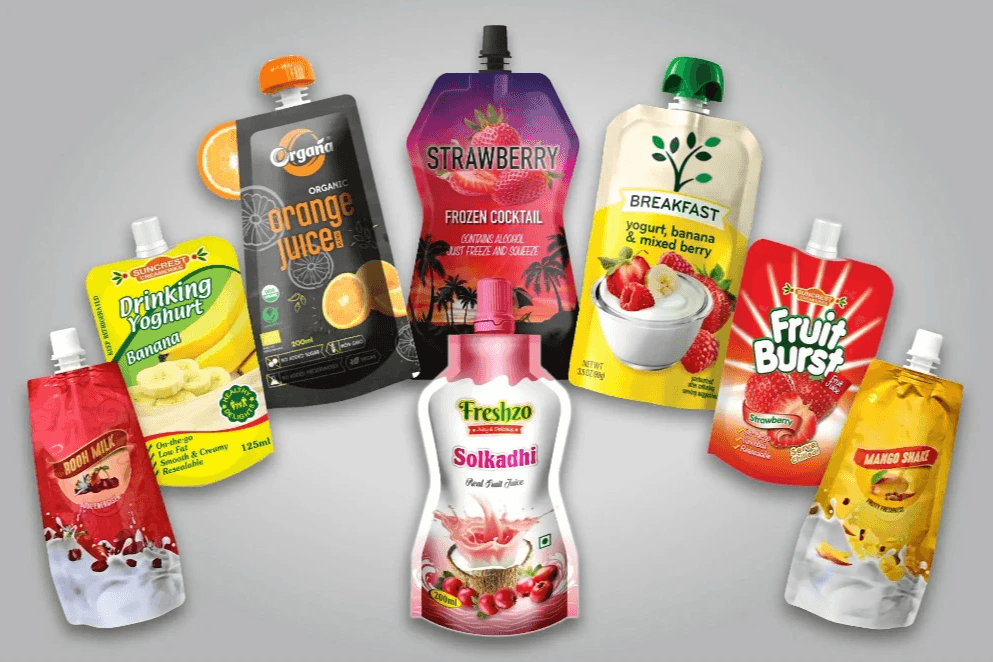
Whether you are setting up a new beverage production line or upgrading an existing facility, this guide covers the key factors to consider before investing in an automatic drink pouch filling and capping machine in 2026.
1. Start with Your Product: What Are You Filling?
Not all beverages behave the same way during filling. Viscosity, temperature, ingredients, and particle content can significantly affect machine configuration and filling performance.
Before selecting a machine, define your product and its processing requirements.
Common applications for drink pouch filling machines include:
· Fruit juice: Orange juice, mango juice, apple juice, mixed fruit juice, and other beverages.
· Dairy beverages: Milk, flavored milk, yogurt drinks, and fermented milk products.
· Plant-based drinks: Soy milk, oat drinks, and other plant-based beverages.
· Functional beverages: Electrolyte drinks, nutritional drinks, and flavored water.
· Smoothies and purees: Fruit smoothies, vegetable purees, and baby food.
· Liquid jelly: Jelly drinks and other semi-liquid products.
Pay particular attention to the following product characteristics:
· Viscosity and flow behavior
· Filling temperature
· Presence of fruit pulp or solid particles
· Sensitivity to oxygen exposure
· Required shelf life and storage conditions
· Cleaning and sanitation requirements
For example, filling clear juice is generally less demanding than filling a thick smoothie containing fruit particles. The latter may require larger product passages, a suitable pump, and specially designed filling nozzles.
Our recommendation: Ask your machine supplier to evaluate your actual product rather than selecting a filling system based on water tests alone.
2. Make Sure the Machine Matches Your Pouch Specifications
Packaging compatibility is one of the first things to verify when purchasing a spout pouch filling machine.
Most automatic drink pouch filling machines are designed to handle pre-made spout pouches. The machine feed the pouch, fills the product through the spout, and tightens the cap automatically.
However, not all pouches are interchangeable.
You should provide your supplier with the following packaging details:
· Pouch width and height
· Nominal filling volume
· Spout diameter and position
· Cap type and dimensions
· Pouch material and laminate structure
· Pouch opening and sealing specifications
Typical beverage pouch sizes include 100 ml, 150 ml, 200 ml, 250 ml, 300 ml, 500 ml, and 1,000 ml.
Small pouches are commonly used for children's beverages, yogurt drinks, and fruit purees, while larger formats are suitable for family-sized juice and dairy products.
If you plan to run multiple pouch sizes on the same machine, confirm the available size range, changeover procedure, and whether additional change parts are required.
A practical tip: Send physical pouch and cap samples to the manufacturer before finalizing the machine design. This allows the supplier to check positioning, filling access, and capping compatibility.
3. Calculate the Production Capacity You Actually Need
Production speed is one of the most important factors in equipment selection, but a higher advertised output does not automatically mean a better investment.
Your required capacity should be based on:
· Current sales volume
· Expected market growth
· Daily operating hours
· Number of production shifts
· Filling volume
· Available factory space
· Downstream packaging capacity
For example, a beverage factory producing 200 ml juice pouches may require a different machine configuration from a manufacturer producing 1 L milk beverages.
The number of filling heads is another important consideration. Generally, increasing the number of filling heads allows higher output, provided the product supply, pouch handling, and capping systems can support the required speed.
Example: Guocheng GCPACK LT-16 High-Speed Filling and Capping Machine
For manufacturers requiring large-scale production, Guocheng offers the LT-16 automatic spout pouch filling and capping machine.
Key specifications:
· Number of filling heads: 16
· Production capacity: 16,000–24,000 pouches/hour
· Filling range: 300 ml–5 L
· Automatic filling and capping
· Servo-controlled filling volume adjustment
· Servo-controlled capping torque adjustment
· CIP cleaning connection system
The LT-16 is designed for high-volume liquid and semi-liquid product packaging, including compatible beverages, dairy products, fruit purees, sauces, and other liquid food applications.
Actual output depends on product viscosity, filling volume, pouch specifications, and production conditions.
When comparing machines, always ask for the expected operating speed using your own product and packaging format.
4. Choose the Right Filling Technology
The filling system directly affects accuracy, consistency, product handling, and maintenance requirements.
Different products may require different filling technologies.
Piston Filling
Piston filling systems are commonly used for liquid and semi-liquid products. They provide controlled volumetric filling and can be configured for products with different viscosities.
They are worth considering for products such as yogurt drinks, fruit puree, and thicker beverages, subject to the specific product characteristics.
Flow Meter Filling
Flow meter systems measure the volume of liquid passing through the filling line. They can be suitable for compatible free-flowing liquids where accurate measurement and process control are required.
Product conductivity, viscosity, temperature, and flow characteristics must be considered when selecting the meter.
Customized Filling Solutions
Products containing fruit pulp, small particles, or sensitive ingredients may require customized filling passages, valves, nozzles, and product delivery systems.
When evaluating filling technology, look beyond the basic filling principle.
Ask your supplier about:
· Filling accuracy under actual production conditions
· Product dripping and splashing prevention
· Nozzle design
· Product contact materials
· Ease of cleaning
· Maintenance requirements
The best filling system is the one that handles your product reliably throughout continuous production.
5. Prioritize Hygienic Design and Cleaning Efficiency
Food safety and sanitation are essential considerations for beverage manufacturers, particularly those producing dairy products, juices, and ready-to-drink beverages.
When evaluating a drink pouch filling machine, pay attention to the design of product-contact components and the cleaning process.
Food-Contact Materials
Stainless steel is commonly used for food processing and packaging equipment.
Depending on the product and cleaning conditions, SUS304 or SUS316L stainless steel may be selected for product-contact components.
The material specification should be confirmed against the actual product and applicable food-contact requirements.
CIP Cleaning
Clean-in-place (CIP) connections allow cleaning solutions to circulate through compatible product-contact pipes and components without complete dismantling.
This can reduce manual cleaning work and shorten cleaning downtime.
However, not every machine component is automatically CIP-cleanable. Confirm the actual cleaning coverage and procedure with the manufacturer.
Hygienic Machine Design
Other important considerations include:
· Smooth and accessible product-contact surfaces
· Proper drainage
· Easy inspection of filling nozzles and valves
· Suitable seals and gaskets
· Protection of product-contact areas from external contamination
If your product requires aseptic packaging or extended ambient shelf life, additional process engineering is necessary.
A standard automatic filling and capping machine with CIP connections should not be confused with a complete aseptic filling system. Product sterilization, sterile packaging, environmental control, and filling technology must all work together to achieve the required shelf life.
6. Check Filling Accuracy and Cap Tightness
For beverage manufacturers, even small filling inconsistencies can create significant product losses over time.
For example, consistent overfilling across thousands of pouches per hour can increase raw material costs unnecessarily.
A suitable machine should provide:
· Stable filling volume control
· Consistent filling performance
· Adjustable filling parameters
· Effective drip prevention
· Reliable pouch positioning
Capping performance is equally important.
An improperly tightened cap can cause leakage during transportation and storage. Excessive tightening may damage the cap or spout.
A servo-controlled capping system allows the tightening torque to be adjusted according to the cap design and packaging requirements.
Before accepting the machine, test it with actual pouch and cap samples. Check:
1. Filling volume consistency
2. Cap tightness
3. Leakage performance
4. Pouch appearance
5. Continuous running stability
These tests are more meaningful than relying solely on the supplier's theoretical specifications.
7. Consider Automation, Labour Requirements, and Total Cost of Ownership
Automation can improve production efficiency, reduce repetitive manual operations, and deliver more consistent packaging quality.
A typical automatic spout pouch filling and capping machine can integrate:
1. Automatic pouch feeding
2. Pouch detection
3. Product filling
4. Automatic cap feeding
5. Cap tightening
6. Finished pouch discharge
Additional inspection and rejection functions can also be considered depending on the production requirements.
However, the initial purchase price is only one part of the investment.
When comparing different suppliers, consider the total cost of ownership (TCO), including:
· Initial equipment investment
· Labour requirements
· Energy consumption
· Cleaning and changeover time
· Spare parts and maintenance
· Production downtime
· Technical support
· Expected service life
A machine with a higher initial price may provide better long-term value if it delivers higher uptime, lower product waste, and more efficient operation.
For factories planning to increase production, it is also worth considering whether the machine can accommodate future product or packaging changes.
8. Evaluate the Machine Manufacturer, Not Just the Machine
Buying industrial packaging equipment is a long-term business decision. The manufacturer's engineering capabilities and after-sales support can have a direct impact on your production operation.
Before placing an order, evaluate the supplier in several areas.
Manufacturing capabilities
Does the company have its own production facility, machining equipment, assembly workshop, and quality control procedures?
Relevant project experience
Can the supplier demonstrate experience with products and packaging formats similar to yours?
Customization capabilities
Can the engineering team adjust the machine according to your product viscosity, pouch size, filling volume, and output requirements?
Factory testing
Can you inspect the machine and conduct a production test before shipment?
Installation and commissioning
Does the supplier provide on-site installation, commissioning, and operator training?
After-sales service
Are technical support, spare parts, and maintenance guidance available after delivery?
For overseas buyers, clear technical communication and reliable support are particularly important.
A professional manufacturer should be able to explain not only what the machine can do, but also why a particular configuration is suitable for your production requirements.
9. A Practical Checklist Before Requesting a Quotation
To receive an accurate technical proposal and quotation, prepare the following information before contacting a drink pouch filling machine manufacturer.
Product information
· Product name and ingredients
· Viscosity
· Filling temperature
· Fruit pulp or particle content
· Required shelf life
Packaging information
· Pouch dimensions
· Filling volume
· Spout diameter and position
· Cap specifications
· Pouch material
Production requirements
· Target output (pouches/hour)
· Daily operating hours
· Number of production shifts
· Planned future capacity
Factory requirements
· Available installation space
· Electrical power supply
· Compressed air supply
· Cleaning and sanitation requirements
· Required certifications and documentation
Providing this information at the beginning of the project helps the manufacturer recommend a suitable configuration and reduces unnecessary design changes during the quotation and production stages.
10. Why Work with Guocheng Machinery?
Shantou Guocheng Machinery Co., Ltd. is a Chinese manufacturer specializing in filling and packaging machinery.
Founded in 2008, Guocheng has developed filling solutions for food, beverage, dairy, and liquid product manufacturers.
We focus on practical machine engineering, customized configurations, and production requirements across different industries.
Our spout pouch filling and capping machines are designed for applications including:
· Fruit juice and beverage packaging
· Milk and yogurt drink packaging
· Fruit puree and baby food packaging
· Jelly drink packaging
· Sauce, ketchup, oil and ginger garlic paster
· Compatible non-food liquid products
Our equipment range covers different production capacities, from compact single-head machines to high-speed multi-head automatic systems.
For manufacturers looking for higher production efficiency, the LT-16 offers up to 24,000 pouches per hour, with a filling range of 300 ml to 5 L under suitable operating conditions.
We also provide:
· Customized machine configurations
· Servo-controlled filling and capping systems
· CIP cleaning connection options
· Machine testing before shipment
· On-site installation and commissioning
· Operator training and technical support
Our engineering team works with customers to understand their products, packaging specifications, and production targets before recommending an equipment solution.
We welcome international customers to visit our factory in China, inspect our manufacturing facilities, and see the machines in operation.
Frequently Asked Questions
What is a drink pouch filling machine?
A drink pouch filling machine is an automatic packaging machine designed to fill liquid or semi-liquid beverages into pre-made pouches. Spout pouch filling and capping machines fill products through the pouch spout and automatically tighten the cap.
What beverages can be filled into spout pouches?
Common applications include fruit juice, milk, yogurt drinks, smoothies, flavored water, liquid jelly, fruit puree, and other compatible beverages. The machine configuration depends on viscosity, particle content, filling temperature, and hygiene requirements.
How fast can an automatic drink pouch filling machine operate?
Production capacity varies according to the machine design, number of filling heads, filling volume, and product characteristics. Speed from 1000 bags per hour up to 16000 bags per hour. Customized machine with 4 heads, 5 heads, 6 heads, 8 heads, 12 heads, 16 heads,etc.
Can one machine handle different pouch sizes?
Yes, provided the pouch dimensions and spout specifications fall within the machine's designed operating range. Some product changes may require mechanical adjustments or additional change parts.
Can the machine fill thick beverages or products containing fruit pulp?
Yes, with an appropriate filling system, pump, and nozzle configuration. The product viscosity and maximum particle size should be evaluated before machine selection.
Does a drink pouch filling machine require CIP?
CIP is not mandatory for every application, but it is an important consideration for many beverage and dairy production lines. The required cleaning method depends on product characteristics, hygiene standards, and factory procedures.
Does Guocheng provide overseas installation services?
Yes. Guocheng can arrange technicians to visit the customer's factory for installation, commissioning, and operator training. Travel expenses and service fees are agreed upon in advance.
Looking for the Right Drink Pouch Filling Machine?
Choosing the right equipment is about finding a balance between product compatibility, production capacity, packaging quality, hygiene, and long-term operating costs.
If you are planning a new beverage production line or upgrading your existing packaging operation, Guocheng Machinery can help you evaluate your requirements and develop a suitable filling and capping solution.
Send us your product details, pouch specifications, and target production capacity. Our engineering team will help you select the right machine configuration.
Contact Guocheng Machinery (GCPACK) today to discuss your project and request a customized quotation.