

Canned food waste recycling has long depended on manual operations such as:
Opening cans
Emptying contents
Separating metal and organic waste
However, these processes are increasingly seen as inefficient and costly.
With rising wages and stricter safety standards, many facilities are now facing:
Higher operational expenses
Difficulty in recruiting workers
Increased management complexity
As a result, reducing labor dependency has become a key strategic priority.
Automation Emerges as the Key Solution.
To address these challenges, recycling plants are adopting advanced automation technologies, including:
Automatic can opening systems
Depackaging and separation equipment
Continuous processing lines
These systems significantly reduce the need for manual labor while improving consistency and throughput.
In many cases, facilities report:
Labor cost reductions of over 60%
Improved processing efficiency
More stable and predictable operations
Integrated Systems Drive Efficiency Gains
A growing trend in the industry is the use of integrated depackaging systems that combine multiple processes into one streamlined solution:
Can opening
Content extraction
Separation of packaging and organic waste
Can crushing
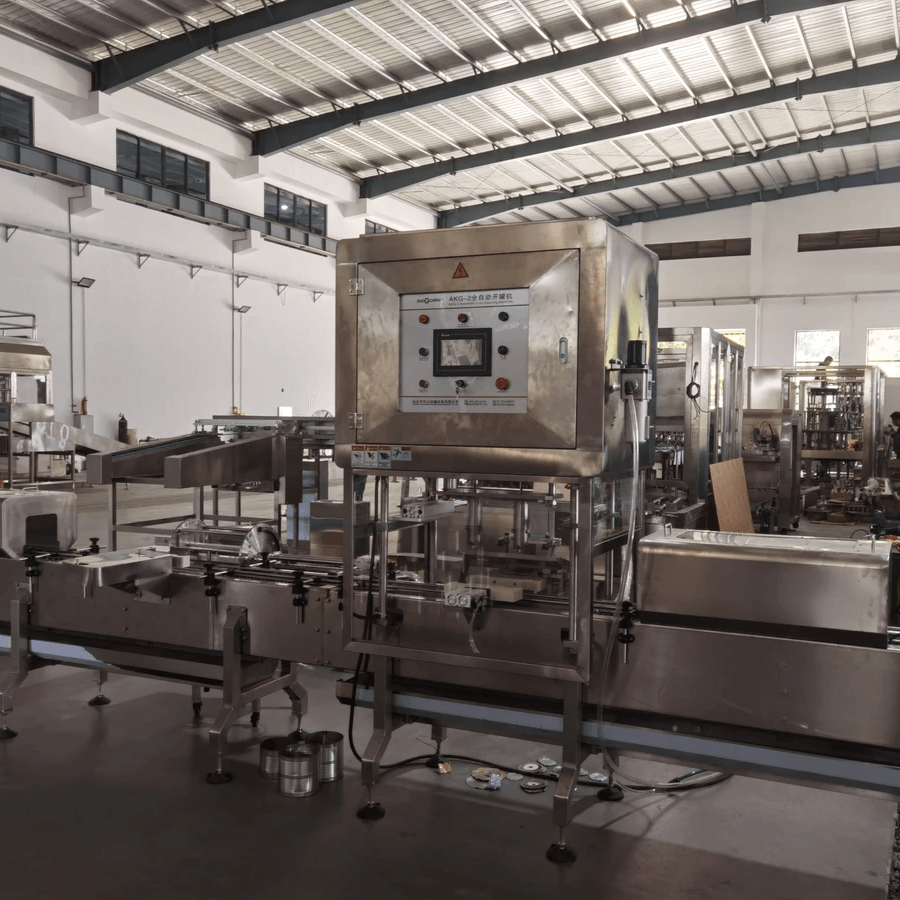
By consolidating operations, these systems:
Reduce the number of required workers
Lower equipment footprint
Simplify maintenance and management
Continuous Processing Becomes the New Standard
Compared to traditional batch operations, continuous processing systems offer clear advantages:
Minimal manual intervention
Reduced downtime
Higher daily processing capacity
This shift is particularly beneficial for large-scale recycling plants and waste-to-energy facilities aiming to maximize output while minimizing labor input.
Smart Control Systems Improve Productivity
Modern recycling equipment is increasingly equipped with intelligent control systems such as:
PLC automation
Touchscreen interfaces
Remote monitoring
These technologies allow fewer operators to manage entire production lines, further reducing labor requirements while maintaining high efficiency.
A Turning Point for Recycling Operations.
Industry experts agree that automation is no longer just an upgrade—it is becoming a necessity.
Companies that continue to rely heavily on manual processes risk:
Higher long-term costs
Lower competitiveness
Operational instability
Meanwhile, early adopters of automation are already seeing measurable gains in efficiency and profitability.
Conclusion: From Cost Pressure to Opportunity
The challenge of rising labor costs is pushing the canned food waste recycling industry toward a more automated and efficient future.
For many companies, this transition is not only about cost reduction—but also about building scalable, sustainable operations.
Looking to Reduce Labor Cost in Your Plant?
If your facility is handling:
Canned food waste recycling (canned tuna, canned fruit, canned meat, canned milk powder)